
Talent. It’s an overused word for an under-solved problem. In our field, we hear about wars for talent, winning talent, managing talent, attracting talent. To compete effectively, we create talent frameworks, talent maps, talent strategies, talent planning cycles. And still, the challenge of finding, keeping and motivating the best people seems to elude even the most savvy leaders and companies.

The speed of change is not just disruptive. It is exponential. Technology and automation are having a profound influence on talent – and not in the way we once thought. According to the World Economic Forum, at least 133 million new roles will be generated by 2022, a result of the onset of the fourth industrial revolution. And as humans become more technologically advanced, we will need work hard to maintain emotional connections – with other humans. It’s time to reimagine the way we look at talent. I believe a different definition of “talent” is needed. A new way to frame the challenges at hand, one that puts humans at the center.
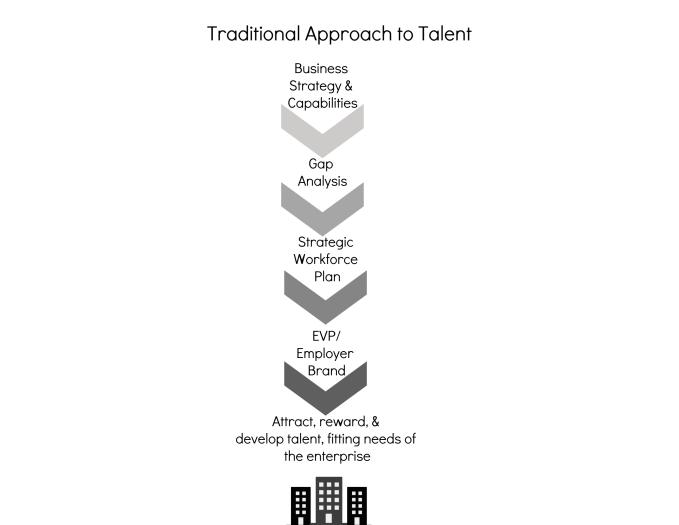
In today’s world, talent strategy is driven by the enterprise. We assess what’s needed to deliver our business strategy, identify the gaps, and develop plans to fill those gaps. Today, talent is enterprise centric, where the needs of the entity outweigh the needs of the employee. In the new world of work, potential employees will seek meaning, a sense of belonging and connection as the workplace automates around us all. Talent practices will become more human centric. For any enterprise to remain competitive, and for society as we know it to remain healthy and sustainable, we will need to put people first.
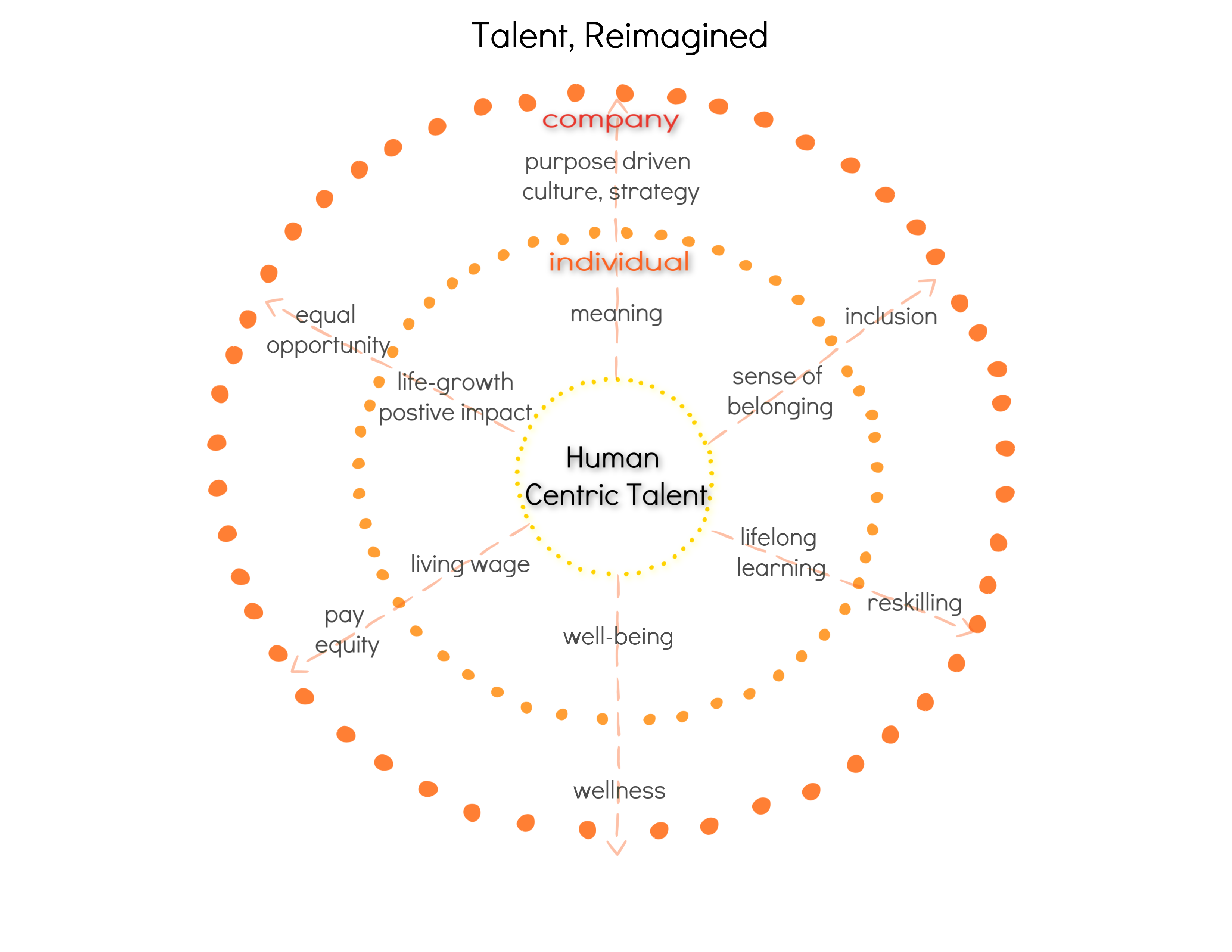
I’m excited to explore this human-centered approach to talent, and am determined to profoundly change and shape the way people experience work and life. And I’m thrilled to have you on this journey with me!



Explore and discover more here:
 Talent Reimagined