

In this day of ‘always on’ technology, the notion of meaning is becoming more prominent in the world of talent. While many believe this is a result of technological advancements and increased social isolation, this is not a new phenomenon. Intrinsic motivational factors have been primary drivers of engagement & retention for quite some time. Elements such as feeling challenged, growing one’s skills, and effective collaboration with colleagues consistently top annual engagement survey drivers.
What is changing, however, is the level of importance placed upon meaning and purpose in the workplace. Research shows that the concept of meaning crosses all generations, yet may be defined slightly differently by each:
Meaning, defined by the generations
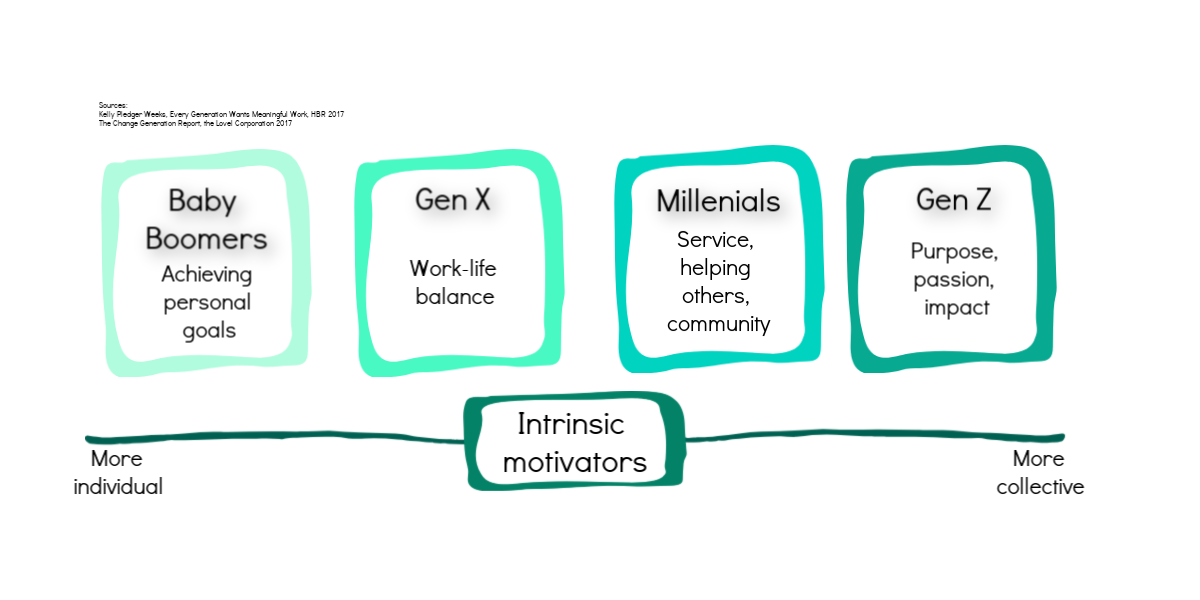
I see a subtle, yet critical shift when it comes to meaning and purpose. We are starting to see a move away from more individualized motivational factors solely being core to the needs of employees (financial growth, achieving personal goals, personal development) to a broader organizational or even worldly context. According to a recent generation study out of Canada, conducted by the Lovell Corporation, Gen Z is the first generation to “prioritize purpose in their work” over other factors:
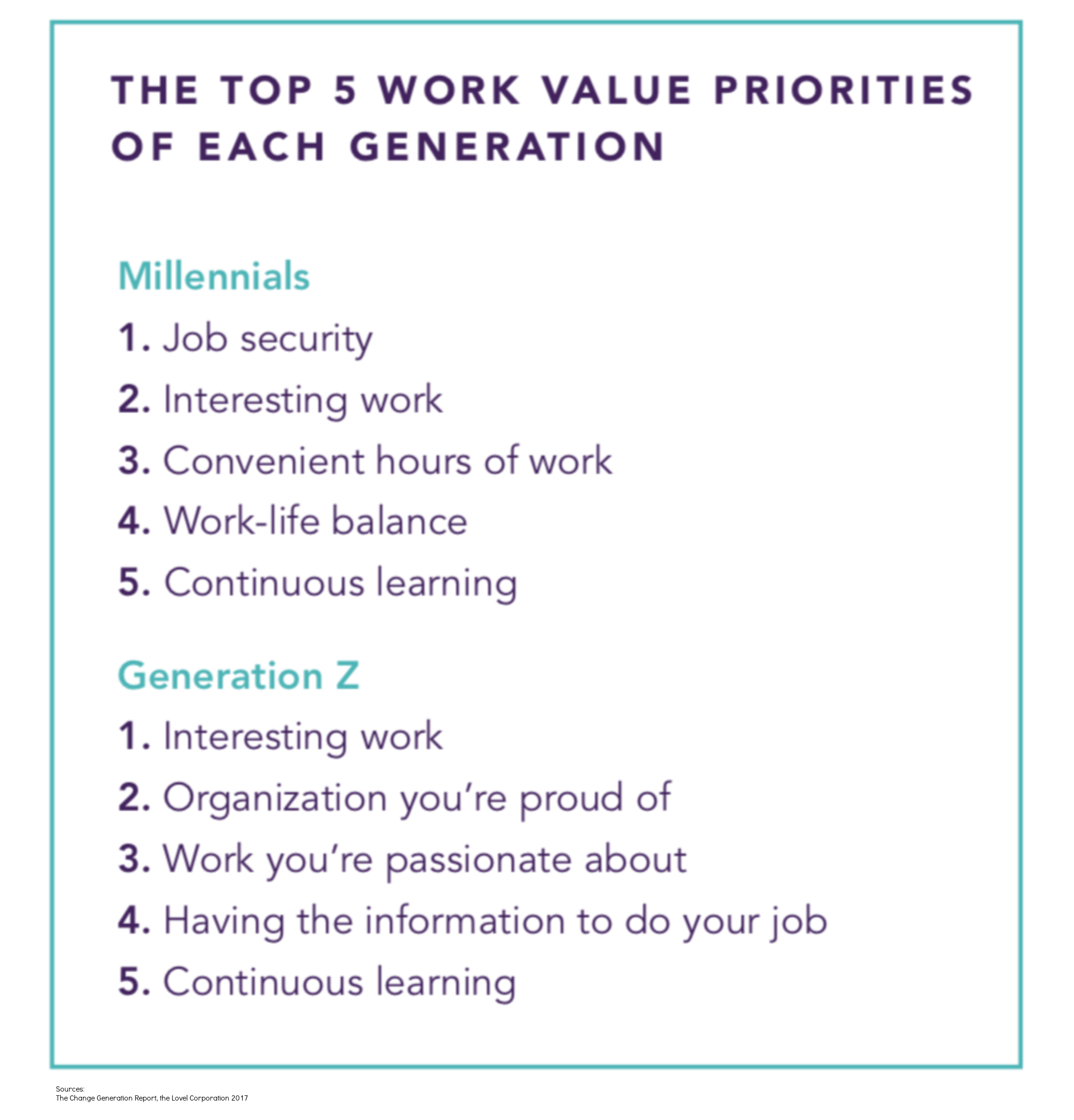
So what’s the implication from a talent perspective? First, for the company. Crafting, communicating and emulating a strong purpose will be critical in the future, not just to attract and retain talent, but to drive organizational performance. And this purpose cannot be solely linked to profit or to the sustained existence of the company itself. It must convey the true reason for being, one that’s connected to the broader social good. In the more human world of work, employees will care more about the impact they have on society.
Second, for the leader. Perhaps the simplest explanation I’ve seen comes from Dave and Wendy Ulrich. In a recent article focused on their book “The Why of Work”, they call out that the best leaders are, in fact, meaning makers. According to Wendy, “people find meaning when they see a clear connection between what they highly value and what they spend time doing. Leaders are in a great position to shape the story of how today’s work connects with those values. This means sharing stories of how the company is making a difference for good in the lives of real people…”.
As we reimagine talent, we must place a heavy emphasis on the company’s purpose, and developing future leaders who are true meaning makers, thus creating a more human connection in the workplace.
Explore and discover more about meaning and purpose here!
https://hbr.org/2017/12/to-find-meaning-in-your-work-change-how-you-think-about-it
The Change Generation Report, The Lovell Corporation. Download a copy here: The Change Generation Report
 Talent Reimagined